

What Is Zanzibar Weather Like by Month?
Zanzibar enjoys a tropical climate with average highs of 28-32°C (82-90°F) and lows of 21-25°C (70-77°F) year-round. The dry season runs June to October with minimal rain and pleasant breezes, ideal for visiting.
Rainy periods include long rains (March-May) with heavy showers and short rains (November-December) that are lighter. Sea temperatures stay warm at 25-29°C (77-84°F) for swimming anytime.
January–February are hot and dry, March–May bring long rains, June–October are cooler and dry, and November has short rains.
The best months to visit depend on your priorities—beach weather, budget, diving, or avoiding crowds.
Planning a trip to Zanzibar often starts with one key question: What will the weather be like when I visit?
Because Zanzibar sits just south of the equator, its climate is tropical, warm, and ocean-influenced all year—but rainfall, humidity, sea conditions, and travel costs change significantly from month to month.
This Zanzibar weather by month guide is designed to help you choose the right time for your kind of trip, whether you’re dreaming of calm turquoise waters, affordable travel, snorkeling with dolphins, or a relaxed cultural escape.
Drawing on local expertise from Go Smart Zanzibar Tours, this guide breaks down:
- Monthly temperatures and rainfall
- Sea conditions and visibility
- Crowd levels and travel costs
- What each month is best (and not ideal) for
By the end, you’ll know exactly when to visit Zanzibar—and how to plan confidently around the weather.
Table of Contents
What Is the Overall Climate in Zanzibar?
Zanzibar’s climate is tropical, meaning it’s warm and humid throughout the year, influenced by its location just south of the equator in the Indian Ocean.
Expect consistent daylight around 12 hours daily, with sunshine varying by season. The islands—Unguja (main Zanzibar Island), Pemba, and smaller ones like Mafia—share similar patterns, though Pemba can be slightly wetter.
Key features include two dry seasons and two rainy ones.
The long dry season from June to October brings clear skies, lower humidity, and refreshing trade winds, making it prime for outdoor fun. January and February offer a short dry spell with hotter days.
Rainfall peaks during the long rains (March to May), when heavy afternoon showers can make roads muddy and some lodges close. Short rains in November and December are briefer, often just morning drizzles.
Humidity hovers around 75-84%, feeling muggiest during rainy months. Winds, like the southern “kusi” in dry months or northern “kaskazi” in wetter ones, affect beach conditions—stronger on east coasts for kitesurfing, calmer in the north and west.
Sea temperatures remain inviting, never dropping below 25°C (77°F), perfect for diving or swimming.
From our experience at Gosmart Zanzibar Tours, this climate supports year-round travel, but planning around rain ensures you maximize beach time and avoid disruptions.
Zanzibar Weather by Month: Detailed Breakdown
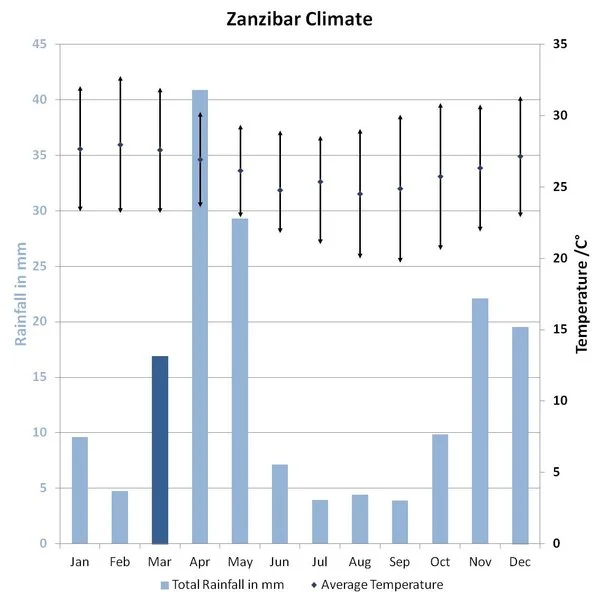
Here’s a month-by-month look at Zanzibar’s weather, based on historical averages.
I’ll cover temperatures, rainfall, humidity, wind, sea conditions, and what it means for your trip.
For quick reference, check this table summarizing key stats:
| Month | Avg High (°C/°F) | Avg Low (°C/°F) | Rainfall (mm/in) | Rainy Days | Humidity (%) | Sea Temp (°C/°F) | Sunshine Hours/Day |
|---|---|---|---|---|---|---|---|
| January | 32/90 | 25/77 | 85/3.3 | 10 | 75 | 28.5/83 | 9 |
| February | 32/90 | 25/77 | 55/2.2 | 7 | 75 | 29/84 | 9 |
| March | 32/90 | 25/77 | 150/5.9 | 13 | 79 | 29.5/85 | 7.5 |
| April | 30/86 | 25/77 | 385/15.2 | 18 | 84 | 29.5/85 | 6 |
| May | 29/84 | 24/75 | 255/10 | 15 | 82 | 28/82 | 6.5 |
| June | 29/84 | 23/73 | 70/2.8 | 7 | 78 | 27/81 | 8 |
| July | 28/82 | 22/72 | 50/2 | 8 | 75 | 26/79 | 8 |
| August | 29/84 | 21/70 | 50/2 | 8 | 75 | 25.5/78 | 8 |
| September | 30/86 | 21/70 | 50/2 | 8 | 75 | 25.5/78 | 8.5 |
| October | 30/86 | 22/72 | 95/3.7 | 9 | 78 | 26.5/80 | 9 |
| November | 30/86 | 23/73 | 215/8.5 | 11 | 82 | 28/82 | 8.5 |
| December | 31/88 | 24/75 | 185/7.3 | 13 | 80 | 28.5/83 | 8.5 |
What’s the Weather Like in Zanzibar in January?
January kicks off the short dry season with hot, sunny days and minimal rain.
Expect average highs of 32°C (90°F) and lows around 25°C (77°F), with about 85mm (3.3in) of rain over 10 days—mostly brief afternoon showers.
Humidity sits at 75%, feeling sticky but bearable with the northeast “kaskazi” winds providing relief, especially on east coasts where they can reach 20-30 km/h (11-17 knots).
Sea temperatures are a balmy 28.5°C (83°F), ideal for extended swims.
For tourists, this is a fantastic time for beach holidays and water activities.
The winds make kitesurfing thrilling in spots like Paje or Kiwengwa, while calmer north beaches like Kendwa are perfect for lounging.
We’ve seen visitors love the vibrant atmosphere—fewer crowds than peak dry season but still lively.
Tip: Book dolphin tours early, as seas are smooth. If you’re planning a January escape, Gosmart Zanzibar Tours can customize your itinerary for optimal weather enjoyment.
What’s the Weather Like in Zanzibar in February?
February is Zanzibar’s hottest month, with highs often hitting 32°C (90°F) or even 35°C (95°F), and lows at 25°C (77°F).
Rainfall drops to 55mm (2.2in) over 7 days, keeping things mostly dry with clear skies and 9 hours of sunshine daily. Humidity remains at 75%, but mellowing “kaskazi” winds offer a gentle breeze.
Seas warm up to 29°C (84°F), inviting endless snorkeling.
This month suits heat-lovers seeking sultry beach vibes. Dolphin-watching in Kizimkazi thrives with calm waters, and west coasts provide stunning sunsets.
From our tours, February visitors appreciate the laid-back feel—great for couples or families.
Pro tip: Stay hydrated and use reef-safe sunscreen.
If February calls to you, reach out to Gosmart Zanzibar Tours for expert guidance on beating the heat while exploring.
What’s the Weather Like in Zanzibar in March?
March transitions to the long rainy season, starting hot and humid with highs of 32°C (90°F) and lows of 25°C (77°F). Rainfall jumps to 150mm (5.9in) over 13 days, with showers building mid-month.
Humidity climbs to 79%, and winds are calm, making for glassy seas at 29.5°C (85°F)—prime for diving with excellent visibility.
Early March is still viable for beaches, but expect unpredictability. Pineapple season starts, offering fresh treats, and fewer tourists mean serene Stone Town wanders.
In our experience, budget travelers love the discounts, but pack for rain. Ramadan may occur (check dates), altering daily rhythms—respect local customs by dressing modestly.
If you’re adventurous, Gosmart Zanzibar Tours can help navigate March’s mix for a unique trip.
What’s the Weather Like in Zanzibar in April?
April is the wettest month, with highs dropping to 30°C (86°F) and lows at 25°C (77°F).
Expect 385mm (15.2in) of rain over 18 days, often intense afternoon storms. Humidity peaks at 84%, winds shift from “kaskazi” to “kusi,” and seas stay warm at 29.5°C (85°F).
This low season brings lush greenery but challenges like closed resorts. Mornings are often clear for walks, and discounts abound for solitude-seekers.
From guiding through rains, we recommend indoor activities like spice tours.
Tip: Bring waterproof gear.
If April fits your budget, chat with Gosmart Zanzibar Tours about rain-resilient plans.
What’s the Weather Like in Zanzibar in May?
May sees the rainy season tapering, with highs of 29°C (84°F) and lows of 24°C (75°F). Rainfall is 255mm (10in) over 15 days, but showers shorten as “kusi” winds strengthen.
Humidity at 82%, seas at 28°C (82°F).
Transitional weather means more sunshine later in the month. Cultural immersions shine with fewer crowds—explore markets or villages.
Our tour insights: North and west coasts are calmer. Pack layers for cooling evenings. Considering May? Gosmart Zanzibar Tours offers flexible options to catch the improving conditions.
What’s the Weather Like in Zanzibar in June?
June ushers in the long dry season, with comfortable highs of 29°C (84°F) and lows of 23°C (73°F). Minimal rain at 70mm (2.8in) over 7 days, low humidity (78%), and strong “kusi” winds up to 35 km/h (18 knots) on east coasts. Seas at 27°C (81°F), 8 sunshine hours.
Perfect for kitesurfing in Paje or snorkeling in calmer north.
Turtle hatching on Mafia adds magic. From our expertise, June’s balance is ideal for families.
Tip: Shelter in north for wind-free beaches.
Ready for June? Let Gosmart Zanzibar Tours book your adventure.
What’s the Weather Like in Zanzibar in July?
July is dry and warm, highs 28°C (82°F), lows 22°C (72°F). Rain minimal at 50mm (2in) over 8 days, humidity 75%, peak “kusi” winds. Seas coolest at 26°C (79°F) but still swim-friendly.
Kitesurfing peaks, festivals like ZIFF enliven Stone Town. Clove harvest scents Pemba.
We love July for vibrant energy—great for groups.
Tip: North for calm diving. If July suits, contact Gosmart Zanzibar Tours for seamless planning.
What’s the Weather Like in Zanzibar in August?
August warms slightly, highs 29°C (84°F), lows 21°C (70°F).
Dry with 50mm (2in) rain over 8 days, fading winds, seas 25.5°C (78°F).
Transition to calmer days; sport fishing thrives.
Turtle hatchings continue. Our tours highlight August’s tranquility.
Tip: East for lingering kitesurf, north for beaches.
Planning August? Gosmart Zanzibar Tours can tailor your itinerary.
What’s the Weather Like in Zanzibar in September?
September is sunny and dry, highs 30°C (86°F), lows 21°C (70°F). Low rain (50mm/2in over 8 days), humidity 75%, light winds, seas 25.5°C (78°F).
Ideal for beach relaxation, spice tours during harvest. Fewer crowds than July-August. From experience, perfect for romance.
Tip: All coasts calm. If September appeals, reach out to Gosmart Zanzibar Tours.
What’s the Weather Like in Zanzibar in October?
October stays dry early, highs 30°C (86°F), lows 22°C (72°F). Rain increases to 95mm (3.7in) over 9 days later, humidity 78%, calm seas at 26.5°C (80°F).
Great diving with warming waters.
Mornings sunny for sailing. We recommend for divers. Tip: Monitor forecasts for end-month rain. October plans? Gosmart Zanzibar Tours is here to help.
What’s the Weather Like in Zanzibar in November?
November brings short rains, highs 30°C (86°F), lows 23°C (73°F). 215mm (8.5in) over 11 days, often brief; humidity 82%, seas 28°C (82°F).
Mornings clear for activities; whale sharks near Mafia.
Budget-friendly with green landscapes. Our tip: Flexible schedules. If November fits, talk to Gosmart Zanzibar Tours for rain-smart tours.
What’s the Weather Like in Zanzibar in December?
December has short rains easing, highs 31°C (88°F), lows 24°C (75°F). 185mm (7.3in) over 13 days, humidity 80%, warm seas 28.5°C (83°F).
Festive vibe for holidays; diving excellent. From our tours, great for families.
Tip: West for sunsets. December dreams? Gosmart Zanzibar Tours can make them happen.
When Is the Best Time to Visit Zanzibar Based on Weather?
The prime window is June to October during the long dry season.
You’ll enjoy clear skies, temperatures around 28-30°C (82-86°F), low rain, and breezes keeping things comfortable.
This aligns with peak activities:
- Beach lounging and swimming: North and west coasts like Nungwi or Kendwa are sheltered.
- Kitesurfing: East coasts (Paje, Jambiani) with strong “kusi” winds.
- Diving and snorkeling: Excellent visibility, especially late season.
- Wildlife: Turtle hatchings (June-August), whale sharks (December, but October edges in).
- Cultural events: Festivals in July, clove harvests July-September.
January-February is a solid alternative for hotter, drier weather—great if you prefer intense sun and fewer winds.
From guiding hundreds of trips, we at Gosmart Zanzibar Tours see these months delivering the most reliable experiences. If you’re aiming for the best, let’s discuss your dates.
When Are the Worst Times to Visit Zanzibar and Why?
Avoid March to May, the long rainy season, when heavy downpours (up to 385mm/15.2in in April) disrupt plans.
High humidity (79-84%) and storms make beaches muddy, roads impassable, and many lodges close.
Diving can be hit-or-miss with reduced visibility.
November-December’s short rains are lighter but still unpredictable, with afternoon showers potentially cutting short outings. However, they’re manageable for flexible travelers seeking deals.
In our years of operation, we’ve advised rerouting during peaks to avoid frustration.
If your schedule lands here, Gosmart Zanzibar Tours can suggest indoor-focused alternatives like Stone Town history tours.
How Does Weather Affect Activities in Zanzibar?
Weather shapes every aspect of your trip—here’s a breakdown:
- Beaches and Swimming: Dry months offer endless sun; rainy seasons bring seaweed or rough seas on exposed coasts. Opt for sheltered spots year-round.
- Water Sports: Winds in June-August boost kitesurfing; calm dry periods favor diving (best February-March, October-December with 29°C/84°F seas).
- Sightseeing and Culture: Rainy months suit indoor spice tours or Stone Town exploration; dry seasons enhance outdoor festivals and hikes.
- Wildlife Viewing: Turtle hatchings peak June-August; dolphin swims year-round but smoothest in dry weather.
- Safaris and Excursions: Combine with mainland Tanzania June-October for migration viewing, as flights connect easily.
From real-world feedback, matching activities to weather maximizes enjoyment.
If you want help aligning yours, Gosmart Zanzibar Tours specializes in personalized packages.
What Should You Pack for Zanzibar Depending on the Month?
Packing smart ensures comfort—tailor to seasons:
Dry Season (June-October):
- Lightweight clothes: Breathable cottons, shorts, t-shirts.
- Windbreaker: For breezy east coasts.
- Swimwear, snorkel gear, reef shoes.
- Sunscreen, hat, sunglasses—sun is intense.
- Light sweater for cooler evenings (lows 21°C/70°F).
Hot Dry (January-February):
- Similar to dry season, plus extra hydration packs.
- Aloe vera for potential sunburn.
Rainy Seasons (March-May, November-December):
- Waterproof jacket, quick-dry clothes.
- Umbrella or poncho for showers.
- Closed shoes for muddy paths.
- Insect repellent—humidity boosts bugs.
- Layers for variable temps.
Always include modest attire for cultural sites, universal adapters, and medications. At Gosmart Zanzibar Tours, we provide packing checklists with bookings—request one for your trip.
How Is Climate Change Impacting Zanzibar Weather?
While patterns hold, we’ve noticed shifts like more unpredictable rains and warmer seas, potentially affecting coral reefs and harvests.
Rising temperatures could extend hot periods, and stronger storms pose risks. Sustainable travel helps—choose eco-lodges, avoid plastics.
Gosmart Zanzibar Tours prioritizes green practices in our itineraries.
Frequently Asked Questions About Zanzibar Weather
Is Zanzibar Hot All Year Round?
Yes, with averages from 25-32°C (77-90°F), it’s consistently warm. Hottest in February-March, cooler in July-August. Pack light, but evenings can feel mild in dry season.
What Is the Best Month to Visit Zanzibar for Beaches?
July-August for dry, breezy weather with highs around 28-29°C (82-84°F) and minimal rain. Seas are swim-ready, crowds lively but manageable.
Is Zanzibar Windy?
Yes, especially June-August with “kusi” winds (up to 35 km/h/18 knots) on east coasts. Calmer in north/west.
Does Weather Affect Flights to Zanzibar?
Rarely, but rainy seasons may cause delays. Dry months are smoothest.
Conclusion
Understanding Zanzibar weather by month helps you plan smarter, travel comfortably, and get the experience you truly want. While Zanzibar is beautiful all year, each month offers something different—from vibrant dry-season energy to peaceful green-season escapes.
Whether you’re planning a beach holiday, honeymoon, diving trip, or family adventure, choosing the right month can make a big difference.
If you’d like local advice, flexible itineraries, or help choosing the best time based on your budget and interests, the team at Go Smart Zanzibar Tours is always here to help—honestly, clearly, and without pressure.
Your perfect Zanzibar trip starts with good planning—and the right timing.

 Contact Us