

Is Zanzibar a Country?
No, Zanzibar is not an independent country. It is a semi-autonomous archipelago within the United Republic of Tanzania in East Africa. With its own president and government handling local matters, Zanzibar unites with mainland Tanzania for defense, foreign affairs, and currency. This setup stems from a 1964 union after centuries of trade, colonialism, and revolution.
If you’re planning a trip to Zanzibar, one of the first questions many travelers ask is surprisingly simple — is Zanzibar a country?
You’ll see different answers online, hear mixed explanations from friends, and even notice that Zanzibar seems to act like its own nation in many ways. That confusion is completely normal.
This guide clears up the confusion around Zanzibar’s status while equipping you with everything needed for a seamless trip. We’ll dive into its history, government, and geography, then shift to practical travel insights like the best visiting times, getting there, must-do activities, costs, and pitfalls to avoid.
Table of Contents
What Exactly is Zanzibar?
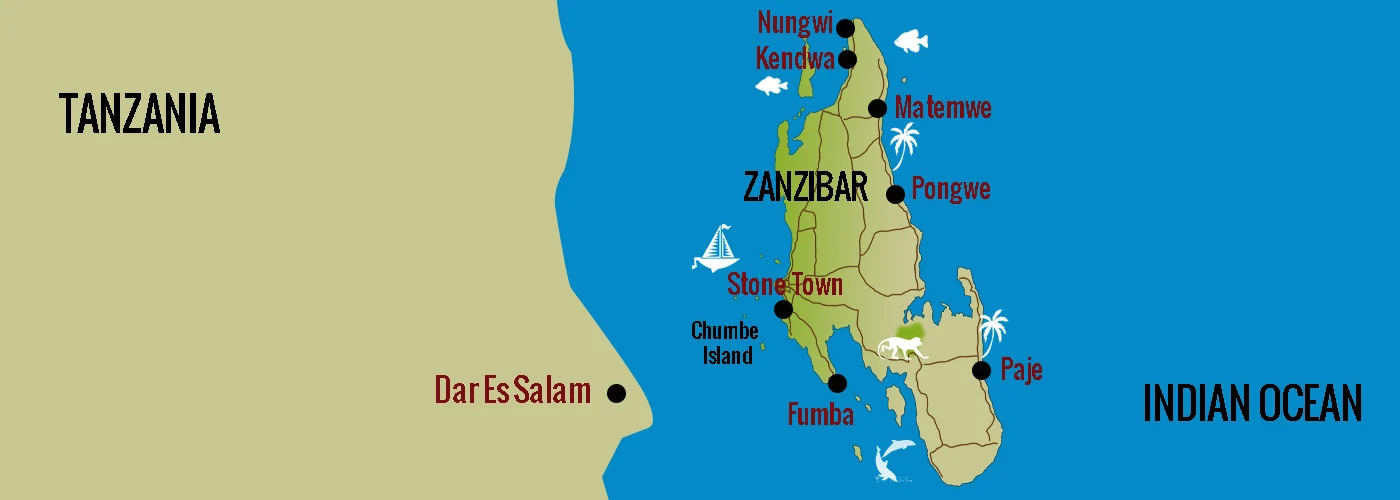
Zanzibar is an archipelago in the Indian Ocean, about 25-50 kilometers off Tanzania’s east coast.
It consists of over 50 islands, with the two largest being Unguja (often called Zanzibar Island) and Pemba. Together, they span roughly 2,461 square kilometers, home to around 1.3 million people.
At its core, Zanzibar is a tropical haven known for white-sand beaches, coral reefs, and lush interiors.
The main island, Unguja, features Stone Town as its cultural heart—a UNESCO World Heritage site with winding streets, historic buildings, and bustling markets.
Pemba, to the north, is greener and less developed, ideal for diving and eco-adventures.
Geographically, it’s positioned at the crossroads of ancient trade routes, which shaped its diverse population of Swahili, Arab, Indian, and European descendants.
Today, it’s a blend of serene coastal villages, spice plantations, and vibrant marine life.
For travelers, this means endless opportunities: snorkeling in crystal-clear waters, wandering spice farms, or simply unwinding under palm trees.
- Key Islands: Unguja (main hub), Pemba (diving hotspot), and smaller ones like Mnemba (private luxury).
- Climate: Tropical, with average temperatures of 25-30°C (77-86°F) year-round.
- Population Mix: Predominantly Muslim, with strong Swahili traditions.
If you’re intrigued by this mix of nature and culture, consider a guided tour to explore hidden gems safely and insightfully.
Is Zanzibar a Country? Yes or No
No, Zanzibar is not a sovereign country. It’s a semi-autonomous region forming part of the United Republic of Tanzania.
This means it has its own elected president, legislature, and control over internal affairs like education, health, and tourism, but it relies on mainland Tanzania for international relations, defense, and monetary policy.
Travelers often confuse it for a nation due to its distinct identity—separate flag, stamps, and even a national football team that plays in non-FIFA matches. But passports stamp “Tanzania” upon entry, and the Tanzanian shilling is the currency.
This status offers visitors the best of both worlds: Zanzibar’s unique vibe with Tanzania’s stability. For instance, you can fly into Zanzibar International Airport directly, but visas are Tanzanian. If planning a visit, this setup simplifies logistics—no extra border crossings needed.
Quick Summary:
- Not independent: Part of Tanzania since 1964.
- Semi-autonomous: Handles local laws.
- Practical Impact: Use Tanzanian visas and currency.
Is Zanzibar a Country or a City?
Zanzibar is neither a country nor a single city—it’s an archipelago with Zanzibar City (also called Stone Town) as its capital on Unguja Island.
The name “Zanzibar” often refers to the whole region or the main island, leading to confusion.
Stone Town is the urban center: a maze of narrow lanes, mosques, and markets, where history comes alive. The broader Zanzibar includes rural areas, beaches, and smaller islands.
For visitors, this means basing in Stone Town for culture, then heading to beaches like Nungwi for relaxation.
Think of it like Hawaii in the U.S.—a distinct island group within a larger nation. This structure makes travel easy: one visa covers all.
Breakdown:
- Archipelago: A group of islands.
- City: Stone Town (population ~200,000).
- Not a Country: Semi-autonomous region.
What is the History Behind Zanzibar’s Status?
Zanzibar’s current status as part of Tanzania traces back millennia. Humans inhabited the islands for 20,000 years, but recorded history begins with traders from Arabia, Persia, and India around the 1st century AD.
By the 8th century, Swahili settlements thrived, blending African and Arab cultures.
Portuguese control arrived in 1498, lasting until Omani Arabs ousted them in 1698. Under Oman, Zanzibar became a slave trade hub, with Sultan Seyyid Said moving his capital there in 1840, boosting clove plantations.
British influence grew in the 19th century, ending slavery in 1897 and establishing a protectorate until 1963 independence.
A 1964 revolution overthrew the sultan, leading to union with Tanganyika to form Tanzania.
This merger stabilized the region but preserved Zanzibar’s autonomy. Today, echoes of this past are in Stone Town’s architecture and festivals.
For travelers, understanding this history enriches visits—tour slave markets or spice farms for firsthand insights.
We’ve led many groups through these sites at Gosmart, revealing layers that make Zanzibar unforgettable.
Timeline Highlights:
- 1st Century: Early traders arrive.
- 1498-1698: Portuguese rule.
- 1698-1890: Omani Sultanate.
- 1890-1963: British Protectorate.
- 1964: Union with Tanzania.
How Does Zanzibar’s Government Work?
Zanzibar operates under a semi-autonomous system within Tanzania. It has its own president elected every five years, and a House of Representatives for local laws.
The Revolutionary Government handles internal issues like tourism, agriculture, and education.
Union matters—defense, foreign policy, citizenship—are managed by Tanzania’s central government in Dodoma.
Zanzibar participates in national elections and has representation in parliament.
This dual structure stems from the 1964 union, balancing local identity with national unity.
Politically, it’s a multi-party system dominated by Chama Cha Mapinduzi (CCM), with opposition like ACT-Wazalendo. For visitors, this means stable tourism policies, but occasional tensions (like in elections) rarely affect travel.
Structure Overview:
- President: Leads the executive.
- House of Representatives: 82 members, legislates locally.
- Union Ties: Shares currency (TZS), military.
If navigating entry rules feels daunting, our team at Gosmart can assist with visa advice tailored to your nationality.
Why Should You Visit Zanzibar?
Zanzibar captivates with its blend of relaxation and discovery.
Pristine beaches like those in Nungwi offer powdery sand and sunset dhow cruises, while Stone Town’s labyrinthine streets reveal a melting pot of cultures through food, music, and architecture.
As an international spot, it’s accessible yet exotic—English is widely spoken, and infrastructure supports everything from luxury resorts to backpacker hostels.
Dive into marine parks teeming with turtles and colorful fish, or hike through spice plantations smelling of vanilla and cinnamon.
Wildlife encounters, like Jozani Forest’s endemic monkeys, add adventure.
Culturally, festivals like Sauti za Busara showcase African rhythms, and cuisine fuses seafood with spices. It’s safe, affordable compared to Caribbean islands, and pairs perfectly with Tanzanian safaris.
Top Reasons:
- Beaches: World-class, uncrowded.
- Culture: UNESCO-listed history.
- Activities: Snorkeling, spices, wildlife.
- Accessibility: Direct flights from Europe, Middle East.
If you’re planning, Gosmart Zanzibar Tours offers customized packages to match your interests—reach out for a free consultation.
When is the Best Time to Visit Zanzibar?
The best time to visit Zanzibar is during the dry season from June to October, when you’ll enjoy sunny days, low humidity, and temperatures around 25-28°C (77-82°F).
This period avoids heavy rains, making it ideal for beach time, diving, and exploring without interruptions.
November to March is hot and humid (up to 32°C/90°F), with short rains—great for fewer crowds and lower prices, but pack for occasional showers. Avoid April-May’s long rainy season, when some resorts close and roads flood.
For marine activities, July-September offers clear waters and whale shark sightings. Festivals peak in February (music) and July (film).
Month-by-Month Tips:
- June-August: Cool, dry—perfect all-around.
- September-October: Warming up, excellent diving.
- November-March: Hot, budget-friendly.
- April-May: Rainy, avoid.
Check forecasts closer to your trip; we’ve helped many at Gosmart Zanzibar Tours adjust plans for optimal weather.
How Can You Get to Zanzibar from Abroad?
Getting to Zanzibar is straightforward for international travelers. Fly into Abeid Amani Karume International Airport (ZNZ) with direct flights from Europe (e.g., Amsterdam, Frankfurt), the Middle East (Dubai, Doha), and Africa (Nairobi, Johannesburg). Airlines like Turkish, Emirates, and KLM serve it.
From the U.S., connect via Europe or Africa—expect 15-20 hours. From Asia, routes go through Dubai. Budget $500-1,500 round-trip, depending on origin and season.
Alternatively, fly to Dar es Salaam (DAR) in mainland Tanzania, then take a 20-minute flight or 2-hour ferry (Azam Marine, ~$35-60). Ferries are scenic but can be rough—opt for flights if prone to seasickness.
Upon arrival, taxis or pre-booked transfers (from Gosmar) cost $10-50 to Stone Town or beaches.
Options Summary:
- Direct Flights: From EU, Middle East.
- Via Mainland: DAR flight/ferry.
- Visas: On arrival for most ($50-100).
- Tips: Book early for peak season.
For hassle-free transfers, contact us at Gosmart—we’ll arrange seamless airport pickups.
What Are the Top Things to Do in Zanzibar?
Zanzibar brims with activities blending adventure, culture, and relaxation.
Start in Stone Town: wander its alleys, visit the Old Fort, and tour the former slave market for poignant history. Don’t miss a spice farm tour—taste fresh cloves and learn cultivation hands-on.
Head to beaches: Nungwi for dhow sunsets and partying, Kendwa for swimming (no tides), Paje for kitesurfing. Snorkel or dive at Mnemba Atoll—spot dolphins, turtles, and reefs. Jozani Forest offers red colobus monkey sightings.
Other highlights: Prison Island for giant tortoises, Safari Blue boat trips with seafood BBQs, and The Rock restaurant on a tidal rock.
Must-Dos List:
- Stone Town Exploration: History walks.
- Spice Tours: Sensory experiences.
- Beach Hopping: Nungwi, Paje.
- Marine Adventures: Snorkeling, diving.
- Wildlife: Jozani monkeys.
- Cultural: Dhow cruises, markets.
Gosmar specializes in these activities. Book a multi-day itinerary for expert guides and insider access.
How Much Does a Trip to Zanzibar Cost?
A Zanzibar trip costs $1,000-3,000 per person for 7-10 days, excluding flights, depending on style. Budget travelers: $50-100/day; mid-range: $150-300; luxury: $400+.
Flights: $500-1,500 round-trip. Accommodation: $20-50/night budget guesthouses, $100-300 mid-range resorts, $500+ luxury. Food: $5-15/meal street eats, $20-50 restaurants. Activities: $20-50 spice tours, $50-100 snorkeling.
Transport: $5-10 taxis, $20-50 island transfers. Visas: $50-100. Total for couple, 10 days mid-range: ~$2,500-4,000.
Budget Breakdown:
- Flights: 40-50% of total.
- Lodging: 20-30%.
- Meals/Activities: 20%.
- Misc: 10% (souvenirs, tips).
To save, visit off-peak. If budgeting help is needed, we offer affordable packages with all-inclusives.
What Common Mistakes Should You Avoid When Visiting Zanzibar?
Many first-timers overlook cultural norms, like dressing modestly in Stone Town—avoid skimpy clothes to respect Muslim traditions, or risk discomfort.
Don’t stay in one area; mix Stone Town with beaches to experience variety—otherwise, long drives eat time. Withdrawing large ATM sums invites fees; use USD cash for better rates.
Ignore police stops calmly—bribes are rare for tourists. Book activities ahead to avoid overpaying touts. During Ramadan, eat discreetly.
Avoid These:
- Immodest dress in towns.
- Single-location stays.
- ATM reliance.
- Unplanned transport.
- Ignoring weather/seasons.
With our local knowledge, we help sidestep these for a smooth journey.
Is Visiting Zanzibar Worth It?
Absolutely—Zanzibar delivers unmatched value with its stunning beaches, rich history, and warm people.
Compared to similar spots like the Maldives, it’s more affordable and diverse, offering culture alongside relaxation.
Travelers return raving about sunsets, fresh seafood, and adventures that feel authentic yet accessible.
If you seek rejuvenation or exploration, it’s ideal.
Minor challenges like occasional power outages are outweighed by the magic.
In my experience with Gosmart Zanzibar Tours, 95% of guests say it’s life-changing.
Why Yes:
- Unique fusion: Beaches + history.
- Budget-friendly luxury.
- Safe, welcoming.
FAQ About Zanzibar
Is Zanzibar safe for international travelers?
Yes, Zanzibar is generally safe, with low crime rates in tourist areas. Stick to common sense: avoid isolated spots at night, use reputable taxis, and secure valuables. Petty theft occurs, but violent crime is rare. Follow health advice like malaria precautions.
Do I need a visa to visit Zanzibar?
Most nationalities need a Tanzanian visa, obtainable on arrival at ZNZ airport for $50-100 (cash/USD). E-visas are available online. Check your country’s requirements—some get free entry. Valid for 90 days.
Is English spoken in Zanzibar?
Yes, English is common in tourist spots, hotels, and guides. Swahili is the main language, but you’ll manage easily. Learning basics like “jambo” (hello) enhances interactions.
Conclusion
So, is Zanzibar a country? The clear and accurate answer is no.
Zanzibar is a semi-autonomous region of Tanzania. Its unique political structure, rich history, and distinct culture explain why the confusion exists, but legally and internationally, it remains part of Tanzania.
For travelers, this is good news. You get the simplicity of one country with the richness of two worlds — mainland Tanzania and the unique islands of Zanzibar.
If you’re ready to experience Zanzibar with confidence, clarity, and local expertise, Go Smart Zanzibar Tours is here to help you plan every detail — from arrival to unforgettable island moments.


 Contact Us